
How to Fill Out and File IRS Form 944 in 2026
Preparing and filing the correct payroll form is essential to fulfilling your payroll obligations. While most businesses will file Internal Revenue Service (IRS) Form 941, Employer's Quarterly Federal Tax Return, other, more obscure tax forms might be more appropriate. This includes IRS Form 941-SS, Employer's Quarterly Federal Tax Return - American Samoa, Guam, the Commonwealth of the Northern Mariana Islands, and the U. S. Virgin Islands, IRS Form 941 (PR), Employer's Quarterly Federal Tax Return (Puerto Rican version), and IRS Form 944, Employer's Annual Federal Tax Return. If your business qualifies for IRS Form 944, the IRS will notify you directly in writing.
If your business has received that notice or you think it might, use this guide to learn all about filing this annual form, including eligibility, how to fill out yours, and federal deposit requirements to comply with.
Key Highlights
Form 944 lets qualifying small employers report and pay Social Security, Medicare, and withheld federal income taxes once a year instead of quarterly.
Only employers notified in writing by the IRS may file Form 944; it cannot be filed on your own initiative.
Employers generally qualify based on an annual payroll tax liability of $1,000 or less, which typically corresponds to $5,000 or less in annual wages.
Household employers and agricultural employers cannot file Form 944.
Form 944 is due January 31st following the tax year, or February 10th for employers who made all deposits on time and in full.
Errors on a filed Form 944 are corrected using IRS Form 944-X, Adjusted Employer's Annual Federal Tax Return or Claim for Refund, not by refiling Form 944.
Who Needs to File Form 944
Any very small employer that is explicitly notified in writing by the IRS must file Form 944. The form is designed for businesses with an annual payroll tax liability of $1,000 or less, allowing them to report and pay taxes annually instead of quarterly. Small business owners cannot voluntarily prepare and submit this form unless the IRS explicitly allows it. If you are not sure whether your business qualifies, a dedicated accountant can confirm your filing requirement and handle the paperwork for you.
Employers Who Cannot File Form 944
Many employers in the United States are ineligible and cannot file IRS Form 944. They include:
Household employers. They will instead use Schedule H (Form 1040), Household Employment Taxes.
Agricultural employers. They will instead use IRS Form 943, Employer's Annual Federal Tax Return for Agricultural Employees.
Employers who have not received IRS notification.
How to Request to File Form 944 Instead of Form 941
If you're a very small employer and think you qualify, but haven't received IRS permission, you can request to file Form 944 instead of Form 941. Call the IRS at 800-829-4933 between January 1st and April 1st, or send a written request postmarked by March 15th to make the switch. Continue filing the previously assigned form until that notice arrives. If the IRS finds that your business is eligible to use Form 944, it will send written confirmation.
Form 944 vs. Form 941: Key Differences
This table lays out the key differences between IRS Forms 944 and 941.
Feature | IRS Form 944 | IRS Form 941 |
|---|---|---|
Filing frequency | Annual | Quarterly |
Eligibility | Must be notified in writing by the IRS; generally, $1,000 or less in annual payroll tax liability | Default form for most employers with employees |
Typical due date | January 31st (or February 10th with timely, full deposits) | Last day of the month following each quarter |
Who cannot use it | Household employers, agricultural employers, and employers not notified by the IRS | Seasonal employers with no wages in a quarter, agricultural employers |
Correcting errors | Form 944-X | Form 941-X |
Gather Information Required for Form 944
These materials will help you determine your current year’s tax liability in Form 944. Gather this information before preparation. Information required to complete Form 944 includes:
Your business's information, including your business name or trade name, business address, and employer identification number (EIN)
The number of traditional W-2 workers you employ
The total amount of wages they received
Total taxes withheld from each employee's paycheck
Total Social Security taxes and Medicare taxes withheld from each paid employee
How to Fill Out Form 944
There are five parts across three pages you must complete before you submit Form 944 to the IRS. You must also sign the form. If any element is missing from your submission, it might create processing delays.
Form 944, Part 1
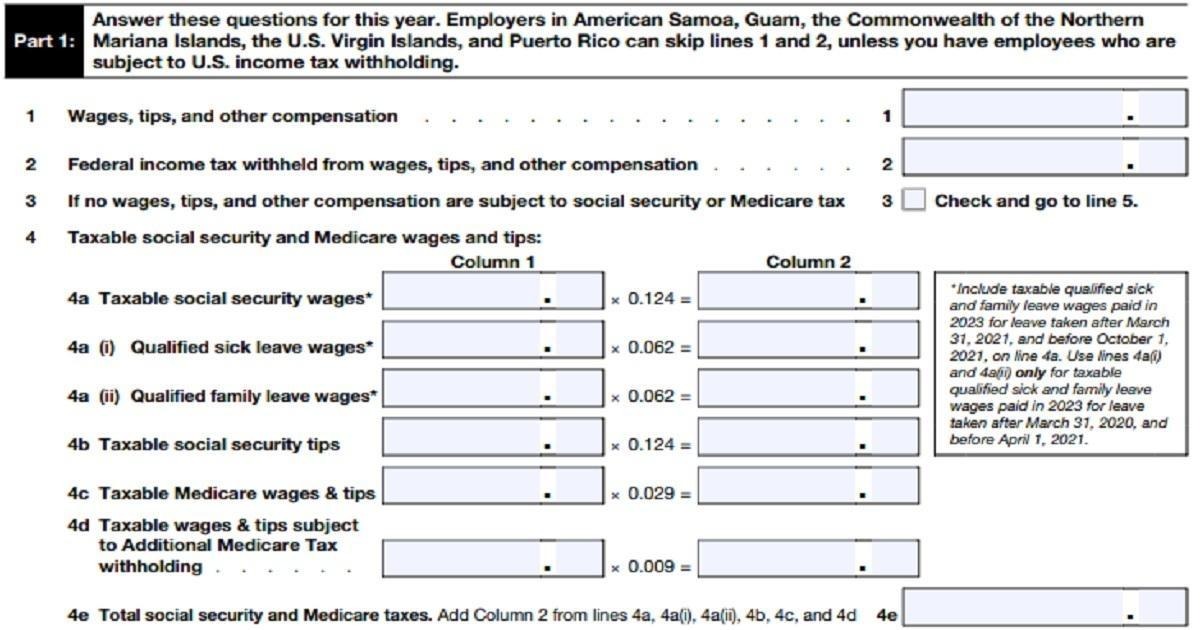
Most of the information from the materials you've gathered will be entered into Part 1 of Form 944. This section details wages, tips, and other compensation. Areas to address include lines 1, 2, 3, 4e, 5, and 6.
Form 944, Part 2
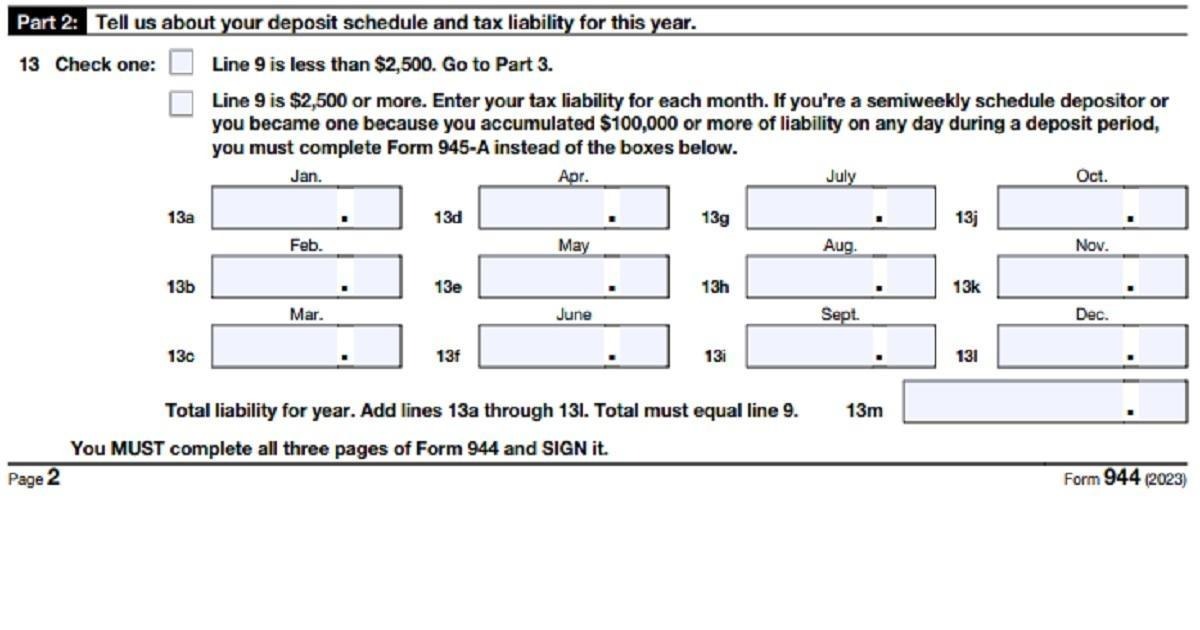
In this section of Form 944, you would disclose your deposit schedule and annual liability.
Form 944, Part 3
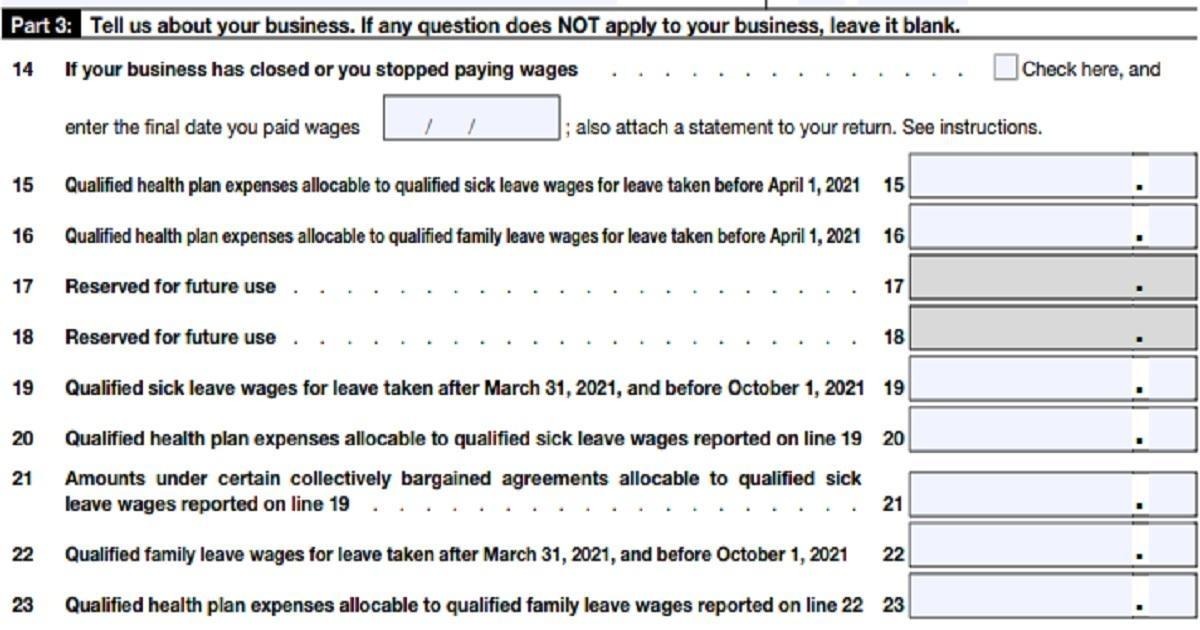
Fill out Part 3 of Form 944 if your business has closed or if you've stopped paying wages. Skip if this does not apply to you.
Form 944, Part 4
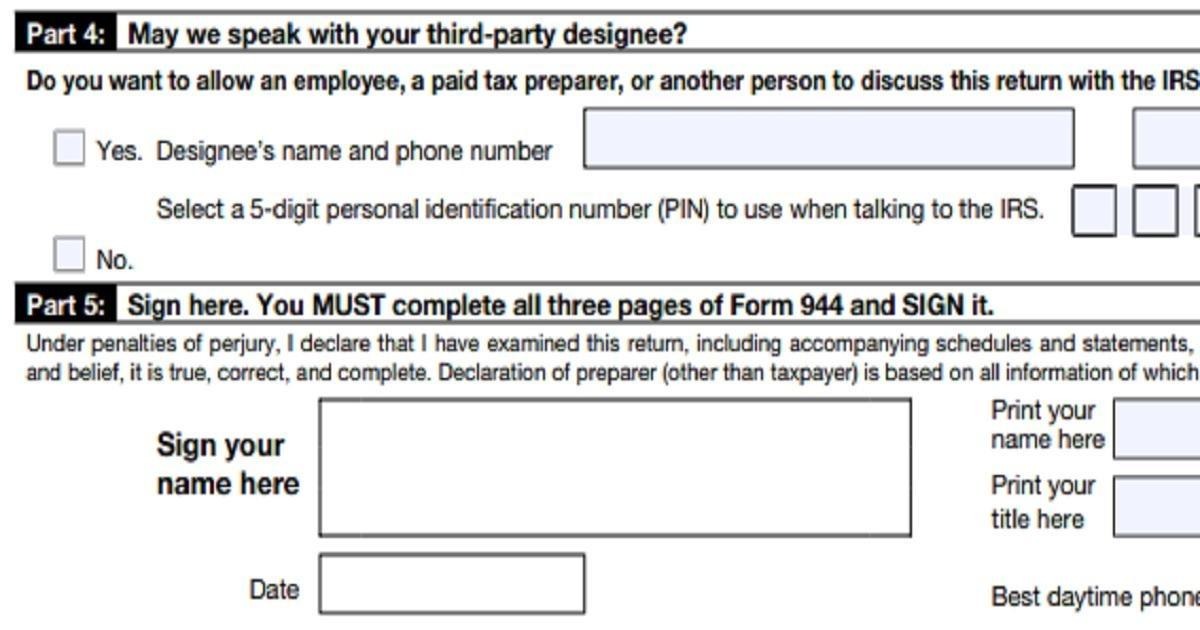
If you would like a third-party designee to discuss this return with the IRS on your behalf, such as an employee or paid preparer, select "yes" and submit their information. If you are uninterested, select "no."
Form 944, Part 5
To complete Form 944, sign and date Part 5.
Signing Form 944
Entity type determines who is authorized to sign IRS Form 944.
Sole proprietorship: Owner
Single-member LLC: Owner or principal officer
Partnership: An authorized partner, member, or officer
Corporation: The president, vice president, or principal officer
Trust or estate: The fiduciary
Filing Form 944
This is how to file Form 944: You must e-file via the electronic federal tax payment system (EFTPS) on the IRS website or mail Form 944 to the IRS by January 31st of the following year. Under Executive Order 14247, "Modernizing Payments To and From America's Bank Account," any balance due must be paid electronically, and overpayments are refunded by direct deposit.
If January 31st falls on a weekend or holiday, the deadline is bumped to the following business day. If your business meets the eligibility requirements for Form 944 in 2026, submit it by the February 1st, 2027, deadline.
Correcting a Filed Form 944 (Form 944-X)
If an error is discovered after filing your Form 944, don't submit a corrected duplicate. Instead, correct errors and submit IRS Form 944-X.
Federal Tax Deposit Requirements
Tax Liability | Deposit Requirement |
|---|---|
If your employment tax liability is $2,500 or less annually. | No federal tax deposits are required at this threshold. Pay this tax along with your tax return. |
If your annual employment tax liability exceeds $2,500 annually but is less than $2,500 quarterly. | You are required to deposit after the quarter has concluded. You have until the last day of the following month to submit the deposit. |
If your tax liability exceeds $2,500 per quarter. | You are required to make deposits according to your designated deposit schedule, which may be twice weekly or monthly. |
Penalties For Late Filing of Form 944
There are penalties for late payments and missing the filing deadline. The IRS imposes a 5% late filing penalty (of your tax bill) that can be charged for up to five months from the missed deadline (up to 25%). For a late payment, it's 0.5% with a cap of 25%.
It is in your best interest to submit the full payment or file as soon as possible after a missed deadline to minimize accruing penalties.
FAQs about Form 944
What is the difference between Form 941 and Form 944?
Form 941 is the Employer's Quarterly Federal Tax Return, used by most employers to report payroll taxes. In contrast, Form 944 is the Employer's Annual Federal Tax Return, reserved only for small employers notified by the IRS who owe $1,000 or less annually. Both forms report federal income tax withheld from employee wages, as well as Social Security and Medicare taxes.
Can I switch from Form 944 back to Form 941?
Yes, you can switch if your business grows and your estimated annual tax liability exceeds the $1,000 threshold. To request the change, you must send a written request postmarked by March 15th or call the IRS by April 1st. The IRS will then send you a written notice confirming your new filing requirement and schedule.
Do I still need to file Form 944 if I had no employees for part of the year?
Yes, if the IRS requires you to file Form 944, you must file it annually, even if you had no employees for part of the year. If you had no employees and no wages to report for the entire year, you must still submit the form with $0 on the appropriate lines. However, if you no longer have employees and plan to stop paying wages permanently, you can file a final return by checking the appropriate box.
Can household employers file Form 944?
No, household employers cannot file Form 944. Household employers must instead report their employment taxes using Schedule H with their personal tax return. A tax professional can help home employers better understand their tax obligations and the forms they need to file.
How do I correct a mistake on a previously filed Form 944?
To correct errors on a previously filed Form 944, you must file Form 944-X. You will use this form to adjust both underreported and overreported taxes for that specific year. Be sure to pay any balance due or claim any refund when you submit the corrections.
Can I e-file Form 944?
Yes, you can e-file Form 944 directly through the IRS e-file page for Employment Tax Forms. You can submit the form electronically using IRS-approved tax preparation software or through a paid tax professional. The IRS also accepts Form 944 via traditional mail.
Work With the Form 944 Payroll Experts
Gathering documentation, accurately filling out Form 944, and submitting it by the deadline can be challenging and time-consuming. When managing your Form 944 obligations distracts from your business, expert payroll support will make a difference.
If you're ready for a payroll partner that handles the process on your behalf, explore 1-800Accountant's full-service payroll solution to see how dedicated support will help.
This post is to be used for informational purposes only and does not constitute legal, business, or tax advice. Each person should consult his or her own attorney, business advisor, or tax advisor with respect to matters referenced in this post. 1‑800Accountant assumes no liability for actions taken in reliance upon the information contained herein.
Subscribe to our
exclusive newsletter
For tax tips, insights, and more,
curated to help your business grow.